How to actually
get out of bed
in the morning
The alarm goes off, your hand finds the button before your brain does, and nine minutes later you're negotiating again. Here's why snoozing is so automatic, what it actually costs, and how to make getting up the easy option.
In this article5 sections · 6 min
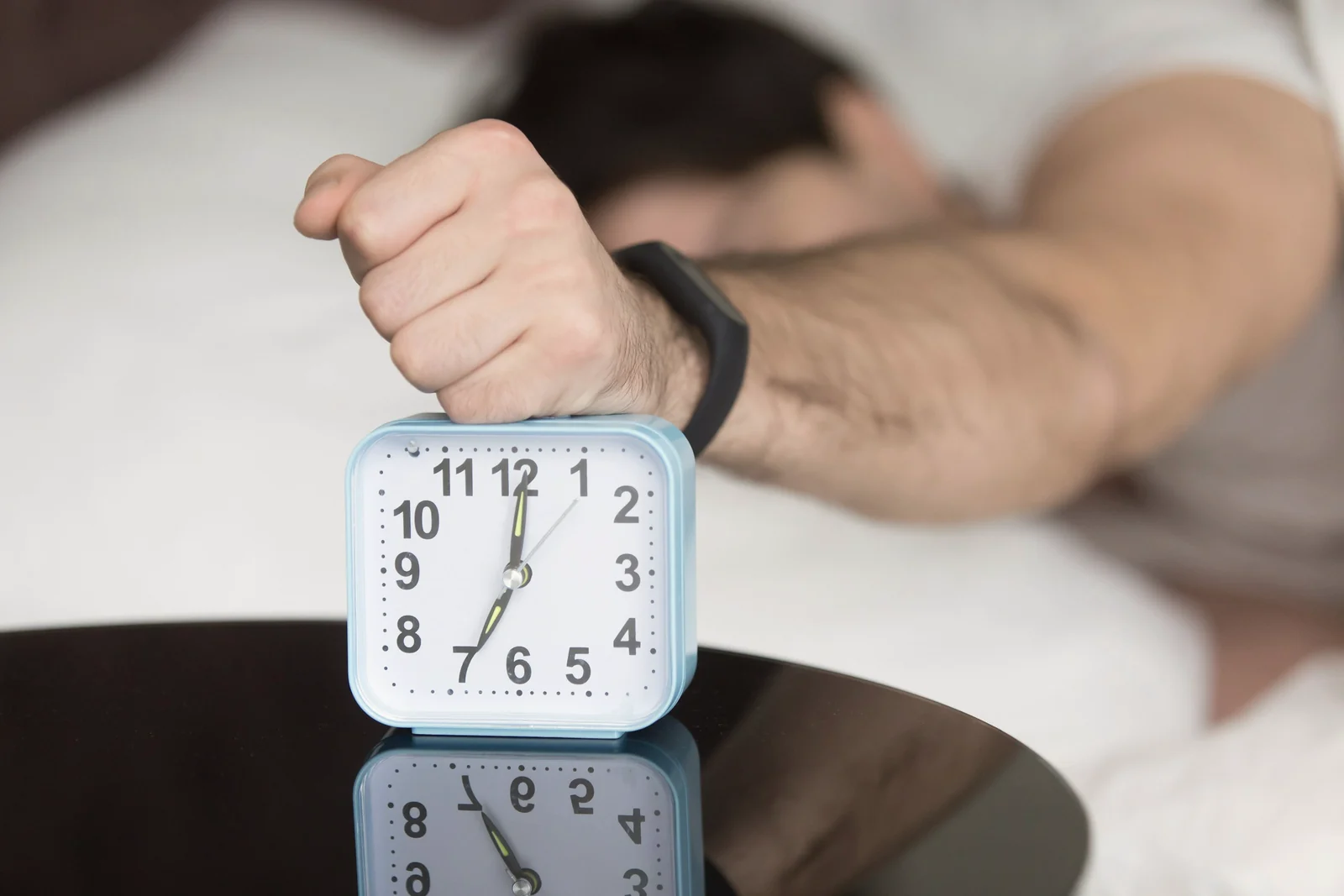
The alarm goes off at 6:45. You hit snooze. At 6:54 it goes off again, and you hit it again, a little more firmly this time. By the third or fourth round you're awake enough to feel guilty but not awake enough to move, and when you finally get up you're late, rushed and somehow more tired than at the first alarm.
You're far from the only one. In a study of 450 people at the University of Notre Dame published in the journal Sleep, 57% were habitual snoozers. The snooze button is one of the most used features on any alarm, which says less about laziness and more about how hard the first minutes of waking really are.
Here's the short version of how to get out of bed in the morning. Most people snooze because waking up is genuinely unpleasant for a few minutes, and the button is right there. To stop, set one alarm for the time you actually need to get up, put that alarm where you have to stand to switch it off, and give yourself a small, specific first thing to do once you're up. If you're snoozing because you're short on sleep, the real fix is the night before.
Why you keep hitting snooze
Waking up is hard for a few minutes
Right after you wake, your brain isn't fully online. Sleep researchers call it sleep inertia: a short period of grogginess, slow thinking and a strong pull back to sleep. It usually fades within 15 to 30 minutes, but it's at its worst in the first few, which is exactly when the alarm asks you to decide whether to get up. You're making the day's first choice at your least capable.
The alarm goes off at the wrong moment
Waking from deep sleep makes sleep inertia worse. If the alarm happens to catch you there, getting up feels much harder than if it caught you in lighter sleep. You can't control which stage you're in when it rings, but you can notice that some mornings are harder than others for reasons that have nothing to do with willpower.
You're short on sleep
This is the big one. If you went to bed at 1 and the alarm rings at 6:45, your body is right to want more. Snoozing is often the morning symptom of a late night, and no alarm trick will fully beat a sleep debt. If late nights are the pattern, start with why you stay up late when you're already exhausted.
The button is easy, and getting up is not
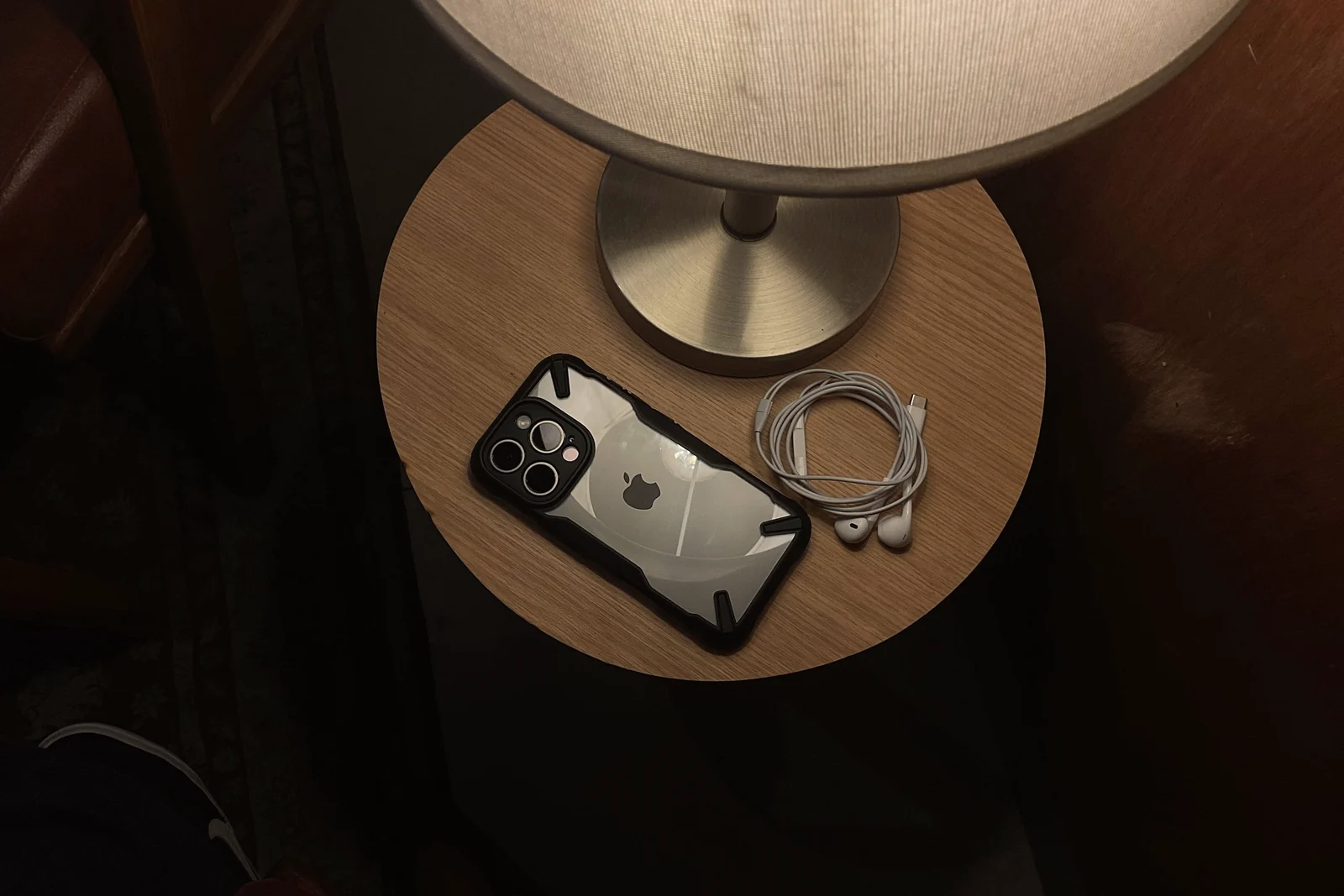
A phone on the bedside table puts the snooze button a few centimetres from your hand. Pressing it costs nothing. Getting up costs warmth, comfort and effort. When one option is that much easier, it wins most mornings.
You're a night owl on an early schedule
People whose body clocks naturally run late tend to find early alarms harder, and the Notre Dame study found that night owls were more likely to snooze. If that's you, you're fighting your own timing every morning, which is worth knowing even when you can't change the schedule.
Is hitting snooze bad for you?
Less than you might have heard. The common claim is that snoozing wrecks your sleep. The research is more mixed.
- It probably won't ruin your morning. In a 2023 study from Stockholm University, habitual snoozers who snoozed for 30 minutes lost only a few minutes of sleep, weren't sleepier or grumpier, and did slightly better on some thinking tests right after waking.
- The sleep you get is light and broken. Snoozing time is fragmented, with repeated wake-ups, so it isn't the same as sleeping 30 minutes longer. If you need those minutes, you'd get more out of them by setting the alarm later.
- It has a practical cost. Snoozing turns getting up into a series of small negotiations, and it's easy to lose track of time and start the day rushed. For many people, that's the real price.
So snoozing isn't a disaster. But if it leaves you rushed, late or annoyed with yourself, it's worth changing, and the fixes below are simple.
How to get out of bed on the first alarm
Set one alarm, for the real time
If you set an alarm for 6:30 knowing you'll get up at 7, you've planned to snooze. Set a single alarm for the time you actually need to be out of bed, and you get half an hour of unbroken sleep instead of thirty minutes of dozing. It feels risky at first. After a week, it's normal.
Put the alarm where you have to stand up
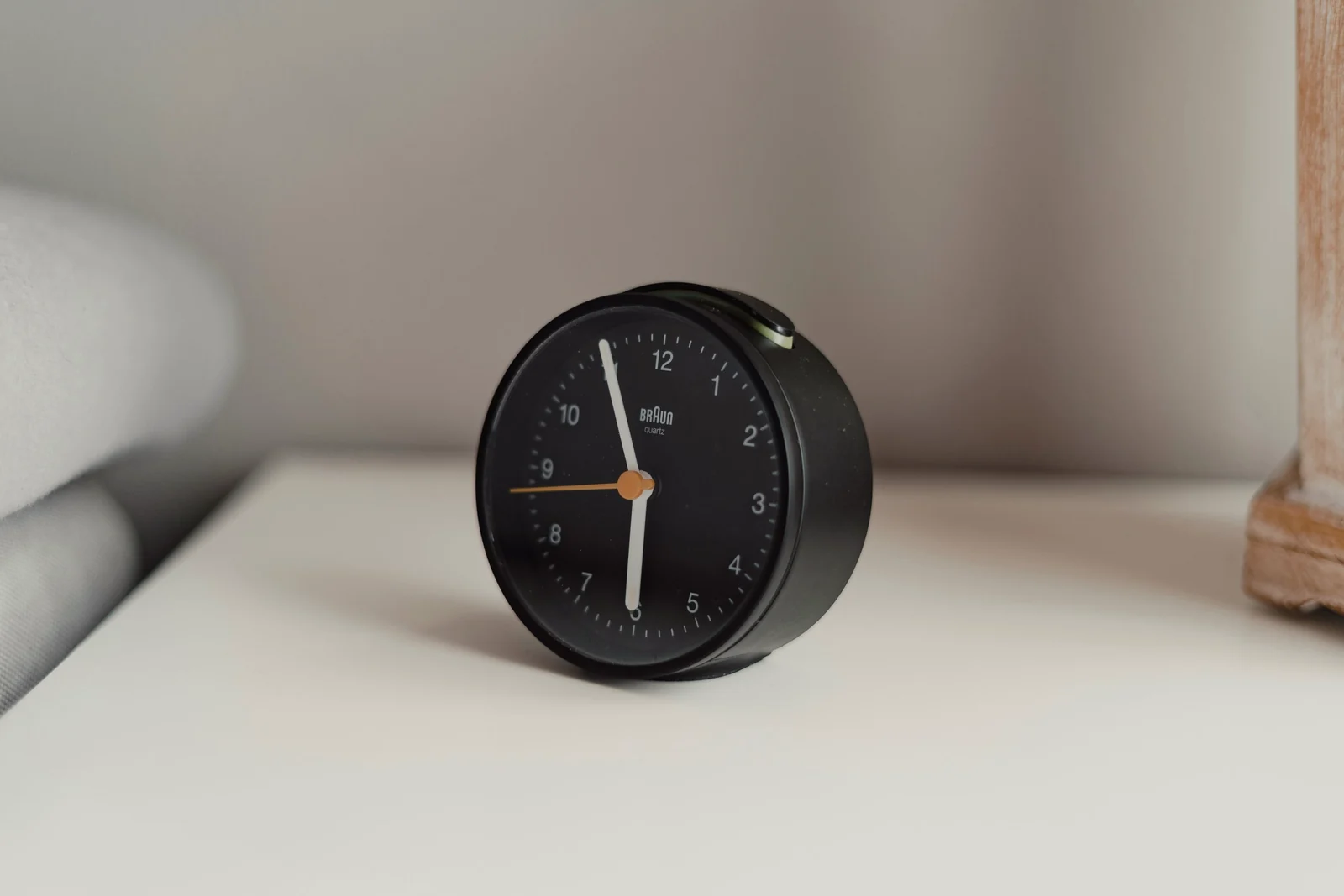
This is the single most effective change, because it moves the decision from your pillow to your feet. If the alarm is across the room, switching it off means standing up, and once you're standing, the hardest part is over. A cheap standalone alarm clock works well, and it also keeps your phone out of the bedroom, which helps you stop checking your phone the second you wake up.
Let light in
Light is one of the strongest signals your body clock gets. Opening the curtains, switching on a bright lamp or stepping outside soon after waking helps shake off grogginess and, over time, helps you wake more easily. If it's still dark when you get up, a bright room light is the next best thing.
Have a small, specific first thing to do
"Get up" is vague. "Walk to the kitchen and put the kettle on" is a plan. A tiny, concrete first step gives your half-awake brain something to follow instead of a decision to make. The best first steps are simple and pleasant: a glass of water, coffee, opening the window.
Keep your wake time steady, even on weekends
A regular wake time is one of the most reliable ways to make mornings easier. When you sleep in by two or three hours on Saturday and Sunday, Monday's alarm arrives at what feels like the middle of your night. Try to keep weekend wake-ups within about an hour of weekday ones.
Fix the night before
If you're snooze-dependent because you're running on six hours, the alarm isn't the problem. Move your bedtime earlier in small steps, fifteen minutes at a time, and protect the hour before it. A phone cutoff before bed is often the easiest place to win that time back.
What to do if you still snooze
Some mornings you'll still snooze. That's fine. Notice what made it harder: a late night, a dark room, a stressful day ahead, a phone left within reach. Each has its own fix, and none of them is "try harder." The goal is to make getting up the easy option, not to win a fight with yourself every morning.
- If you switch the alarm off without remembering
- Move it further from the bed, or somewhere you have to walk to.
- If you're always exhausted at the alarm
- Go to bed 15 minutes earlier for a week, then another 15.
- If the room is dark
- Turn on a bright lamp or open the curtains as your first step.
- If Mondays are the worst
- Keep weekend wake-ups within an hour of weekdays.
- If you reach for your phone and stay in bed
- Charge it outside the bedroom and use a separate alarm.
Try this tomorrow
Tonight, set one alarm for the time you actually need to get up, and put it somewhere you have to stand to reach. Tomorrow, when it rings, get up, switch it off, and walk straight to the kitchen or the window. That's the whole plan. If it works, keep it. If it doesn't, the reason will tell you what to try next.