Why you stay up late
when you're already
exhausted
You're tired, you know you'll regret it, and you stay up anyway. That isn't a lack of discipline. It's a trade most of us make for an hour that finally feels like ours, and there are better ways to get that hour.

In this article7 sections · 7 min
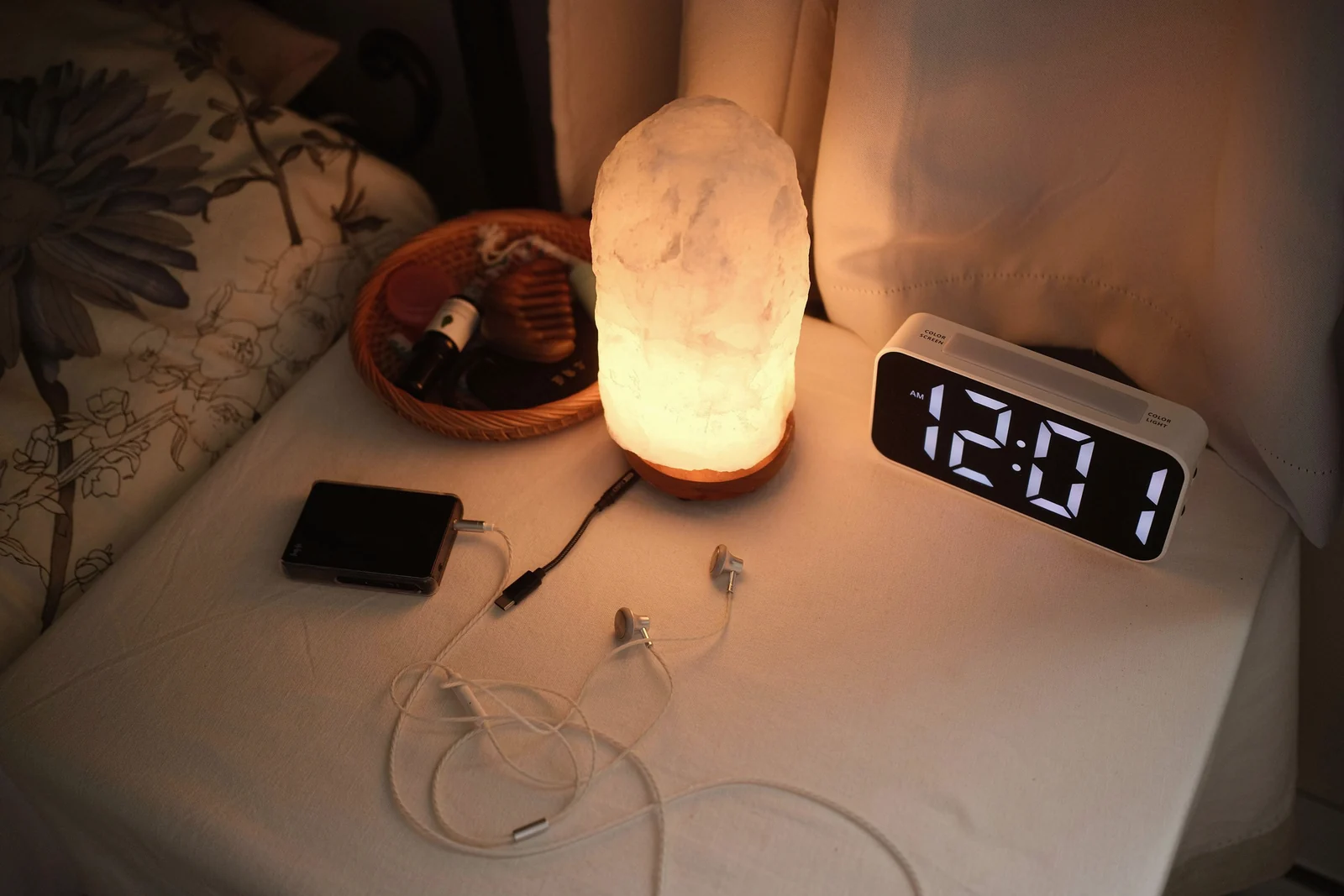
The day finally ends. The dishes are done, the emails are answered, the kids or the housemates or the group chat have gone quiet. You're exhausted, and tomorrow starts early. And instead of going to bed, you pick up your phone, or put on another episode, and suddenly it's half past one.
If you know that feeling, you're not alone, and there's a name for it. Revenge bedtime procrastination is staying up later than you meant to, with no outside reason, because the late evening is the only part of the day that feels like your own. You aren't kept awake by insomnia or a deadline. You're awake because sleeping would mean giving up the one stretch of time nobody else gets to claim.
Here's the short version of how to stop. Make some time feel like yours earlier in the evening, so you don't have to steal it from your sleep. Decide your bedtime and your cutoff during the day, not at midnight. And take the most absorbing things, usually the phone, out of the last hour so the trade gets harder to make.
What is revenge bedtime procrastination?
Psychologists first described bedtime procrastination in 2014 as going to bed later than you intended without any external reason for doing so. The word "revenge" came later. It's a translation of a Chinese phrase, 報復性熬夜 (bàofùxìng áoyè), roughly "retaliatory staying up late," which spread online among people working very long hours. They felt their days had been taken from them, so they took back the night.
The English version went viral in 2020, when lockdowns blurred work and home and a lot of people recognised themselves in it. The Sleep Foundation describes it in much the same terms: delaying sleep to get leisure time that the day didn't leave room for.
Three things usually mark it out:
- The delay is real. You go to bed later than you planned, not just later than some ideal.
- There's no good reason. Nothing has to be done. A sick child or a real deadline doesn't count.
- You know it'll cost you. You expect to feel worse tomorrow and stay up anyway.
It's not a diagnosis, and it isn't insomnia. People with insomnia want to sleep and can't. Revenge bedtime procrastination is the opposite: you could sleep, and you choose not to yet.
Why you stay up late even when you're tired
On paper it makes no sense. You're tired, sleep is free, and you'll pay for the late night tomorrow. In practice it makes a lot of sense, and understanding why is most of the fix.
The evening is the only time that feels like yours
If your day is a long list of other people's needs, the hour after everyone else stops needing you can feel precious. Going to bed ends it. Staying up stretches it. The trade is less about entertainment than about autonomy: a small, private way of saying the day doesn't get all of you.
Tiredness makes the trade feel cheap
The cost of a late night lands tomorrow, and tomorrow is abstract at 11:45 p.m. The reward is right now. When you're worn out, that gap gets wider, because a tired brain leans even harder toward what feels good immediately. The decision gets made by the person least equipped to make it.
The things you do at night have no ending
A feed, autoplay and a group chat never reach a natural stopping point. You don't decide to stay up until 1. You decide, over and over, to watch one more thing, and each choice is too small to feel like it matters. We've written more about why the scroll is so hard to put down at night.
Going to bed means tomorrow starts
For some people, staying up is a way of putting off the next day. If tomorrow holds something you dread, sleep is the fast-forward button, and lingering in the evening holds it off a little longer.
What it costs you
An occasional late night is part of life. The trouble starts when the bargain becomes a pattern. Adults need seven or more hours of sleep a night, according to the CDC, and every hour of revenge time comes straight out of that.
The costs are familiar: a groggy morning, a short temper, more caffeine, and less energy for the very things you wanted more time for. There's a cruel loop in it, too. A short night makes the next day harder, which makes the next evening feel even more like the only time that's yours, which makes staying up even more tempting.
And the time you win back often isn't very restful. Half an hour of scrolling while half asleep rarely feels like a reward afterwards. It's leisure in the technical sense, but not the kind that leaves you feeling better.
The goal isn't to give up your evening. It's to stop paying for it with tomorrow.
How to stop revenge bedtime procrastination
Telling yourself to just go to bed earlier ignores the reason you're staying up. The need for time of your own is real, so the fix is to meet that need somewhere cheaper than your sleep.
Give yourself the time earlier
If the late night is about autonomy, carve out a protected stretch earlier in the evening, even twenty minutes, that's entirely yours. Not chores, not errands, not catching up on messages. Something you actually want to do. When the evening already contains some time for you, there's less need to take it out of the night.
Decide your bedtime during the day
At 11 p.m. you're negotiating with yourself while tired. At lunchtime you're not. Pick a bedtime and a cutoff when you're thinking clearly, and treat them as appointments rather than suggestions. For help picking the cutoff, see how long before bed to put your phone away.
Choose leisure with an ending
Some things finish by themselves: a chapter, a film, a podcast episode on a sleep timer, a bath. Others never do. If you want late-evening time to stay late-evening time, pick the kind that ends. One episode with autoplay off is a very different evening from "a few episodes."
Take the phone out of the last hour
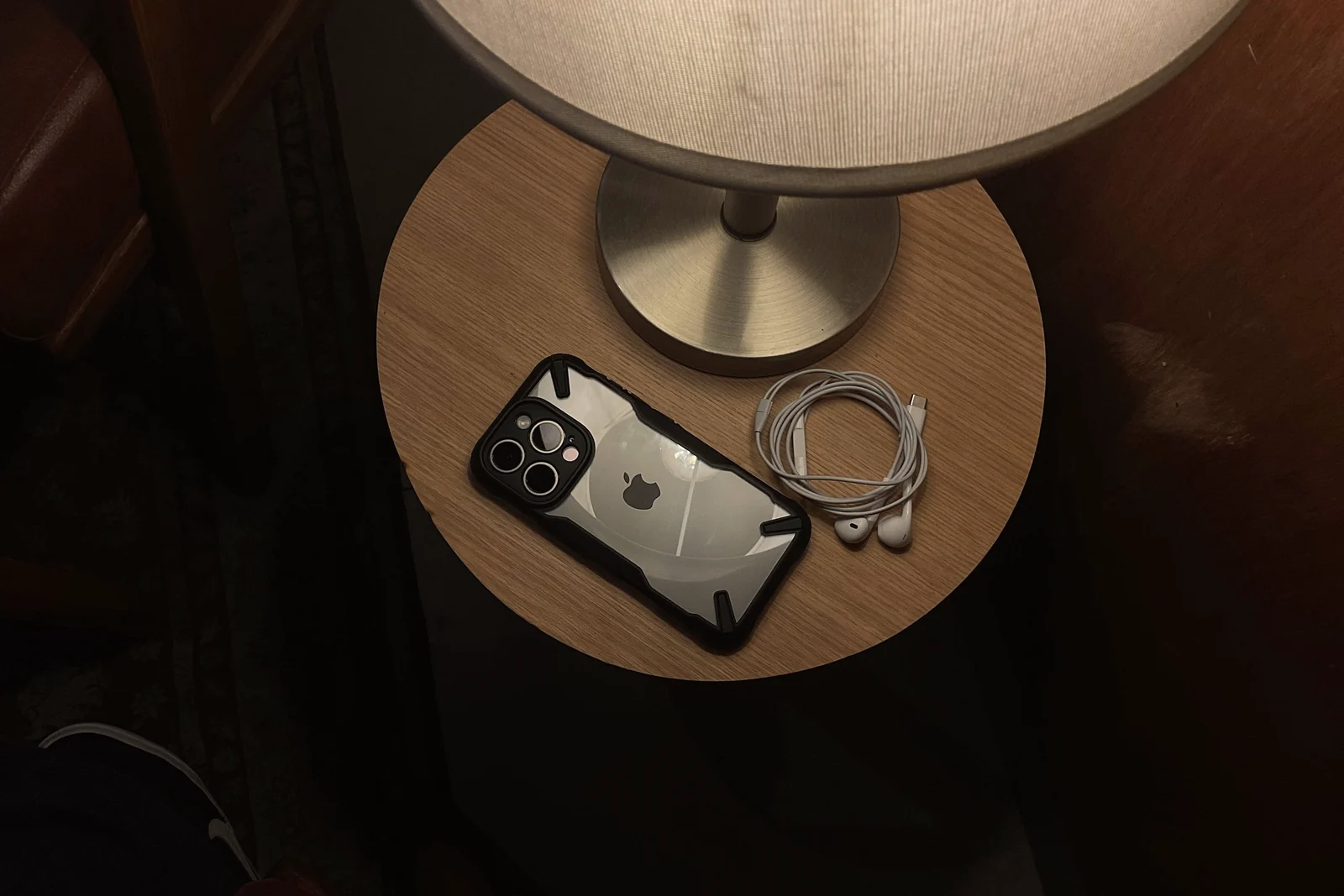
For most people the phone is where the time disappears. Charging it outside the bedroom, or at least out of reach of the pillow, changes the default from "keep going" to "get up if you really want it," and that small effort is often enough. If you need more than distance, here's how to block apps at night on iPhone and Android.
Make the step into bed small
Part of what makes bedtime feel like a loss is the jump from something enjoyable to lying in the dark. A short, pleasant routine in between (washing up, a few pages of a book, lights low) makes the transition gentler. Our guide to a bedtime routine for adults that actually sticks has a 25-minute example.
Look at the day, not just the night
If you never get any time for yourself during the day, no evening trick will fully solve it. It's worth asking where the day's time goes, and whether anything (a commute, a meeting, a chore someone else could share) could give some of it back. Sometimes the late night is the symptom, and the schedule is the cause.
A simple plan for this week
Don't try to fix it all at once. Try one change a night and see what helps.
- Night 1Notice the trade.
Go to bed when you normally would, but jot down what you did after your planned bedtime, and whether it felt worth it.
- Night 2Pick a bedtime at lunch.
Choose it during the day and tell someone, or put it in your calendar.
- Night 3Book twenty minutes for you.
Protect a short stretch early in the evening for something you genuinely enjoy.
- Night 4Move the charger.
Charge your phone somewhere you can't reach from bed.
- Night 5Choose an ending.
Pick evening leisure that finishes on its own, and turn autoplay off.
- Night 6Plan for the weekend.
Late nights creep back on Fridays and Saturdays. Decide in advance how late is fine.
- Night 7Look back.
Which change made the evening feel like enough? Keep that one.
Common questions
Is revenge bedtime procrastination a disorder?
No. It's a pattern of behaviour, not a diagnosis. If you lie awake for long stretches when you do go to bed, wake often, or feel exhausted however long you sleep, that's a different problem and worth raising with a doctor.
Why do I do it even on days off?
Habits outlast their reasons. If staying up has been your routine on work nights, it tends to carry into weekends, especially when there's nothing to get up for. Keeping your bedtime and wake time roughly the same every day makes the whole week easier.
Is it the same as being a night owl?
Not quite. Night owls naturally feel sleepy later, and their best fix is often a later schedule, where life allows it. Revenge bedtime procrastination is staying up past the point where you're already tired. A night owl can do it too, just later.
Try this tonight
Before your evening starts, decide on one thing you'll do just for yourself, and when it'll end. Then do it, enjoy it, and let it be enough. You're not giving up your evening. You're just moving it somewhere that doesn't cost you tomorrow.