How to stop using
your phone before bed
The scroll rarely starts as a decision. It starts with one notification, one more video, one quick check. Here's why it's so hard to stop at night, and how to make putting the phone down feel less like a fight.
In this article10 sections · 12 min
It usually starts with something small. You plug in your phone, set an alarm, and spot a notification you haven't opened yet. You tell yourself you'll just check it. Then there's a reply to read, a video someone sent, a feed that happens to be open already. When you finally look at the clock, forty minutes have gone, your eyes feel dry, and you're somehow more awake than when you got into bed.
If that sounds familiar, you're in very good company. In a 2022 survey of US adults for the American Academy of Sleep Medicine, 80% admitted to losing sleep to social media. The people trying to stop aren't lazy or weak. The habit simply sits at the exact point in the day when we're most tired, least guarded, and finally alone with a device that's very good at holding attention.
Here's the short version. The way to stop scrolling at night is to stop relying on willpower in bed and change the setup earlier, while you're still thinking clearly. Pick a cutoff about half an hour before you want to be asleep, charge your phone where you can't reach it from your pillow, silence the notifications and autoplay that pull you back in, and have something calmer ready to do instead.
This guide won't ask you to lock your phone in a drawer forever. It explains why the scroll is so sticky, then walks through each of those changes so that putting the phone down takes less effort than picking it up.
Why you can't stop scrolling at night
Most of what we do on our phones in bed has no natural ending. A book has chapters. A TV episode has credits. A feed just keeps going, and the next post is loaded before you've decided whether you want it. Autoplay works the same way: one video ends, another begins, and stopping becomes the thing that takes effort.
Notifications add a second pull. Each one is a small open question (who is it, what do they want, does it matter?) and we're wired to want questions closed. Even when the answer is nothing, the checking becomes a loop: a cue, a quick action, and now and then a reward that's interesting enough to make the next check feel worth it. Rewards that arrive unpredictably are especially good at bringing us back, which is why refreshing a feed can feel compelling even when most of what appears is forgettable.
Then there's timing. By the end of the day, most of us have spent hours on other people's demands. The evening is often the first stretch of time that feels like ours, and staying up a little later can feel like taking some of it back. Researchers have a name for putting off sleep without a good reason, even when you know you'll feel worse for it: bedtime procrastination. When the point is to claw back some time for yourself, it's often called revenge bedtime procrastination. It's less a failure of discipline than a very human bargain between tonight and tomorrow. Tonight tends to win, mostly because it's the one in the room.
Is it phone addiction, or a habit?
Whatever you call it, a late-night scroll usually runs like a habit: a cue (getting into bed, a buzz, a quiet moment), a routine (unlock, open, swipe), and a reward just often enough to keep it going. And a habit can be changed by changing the cue and the setup around it, which is what the rest of this guide is about.
If your phone use feels out of control all day, not just at night, or it's hurting your work, relationships or mood, it's worth talking to a doctor or therapist.
Is it bad to use your phone before bed?
It can be, though not mainly for the reason you've probably heard. Blue light from screens gets the blame, and there's something to it, but it's only one piece, and often not the biggest one. It helps to pull apart a few things that usually get lumped together.
- Light. Bright light in the evening, especially the bluer part of the spectrum, tells your body clock it's still daytime. It can reduce or delay the melatonin your body makes in the evening and nudge your natural sleep timing later. A phone is far dimmer than daylight or a ceiling lamp, so for most people the light alone has a modest effect. It adds up when the screen is bright, close to your face, and on for a long time.
- Stimulation. What's on the screen matters at least as much as how it glows. A heated group chat, a stressful headline, a work email or a cliffhanger switches your mind on at the moment you're trying to let it slow down. Doomscrolling, moving from one piece of bad news to the next, is the extreme version.
- Time. This is the simplest cost and the most overlooked. If you meant to sleep at 11 and put the phone down at 12:15, you've lost an hour and a quarter of rest whatever the light did. For many people, the delayed bedtime is the real problem. In a survey of more than 45,000 university students in Norway, each extra hour of screen use after going to bed was linked to 59% higher odds of insomnia symptoms and about 24 minutes less sleep.
- You. People differ. Some naturally run late, some are more sensitive to light or to a busy mind before sleep, and some can read on a phone in bed and drift off without trouble. There's no universal rule here, only what actually happens to you.
One more honest caveat: if you've struggled with sleep for weeks, wake often, or feel exhausted despite spending enough time in bed, that's worth raising with a doctor. A phone habit can make sleep worse, but it's rarely the whole story.
Why willpower alone rarely works
The usual plan goes something like this: tonight I'll be stronger, scroll for ten minutes, then stop. It's a reasonable intention, and it fails for a predictable reason. You're asking the most tired version of yourself, at the end of a long day, to make a careful decision while holding the very thing that makes that decision hard.
There's also no single moment of choice. You never decide once to stay up until midnight. You decide dozens of times, one swipe at a time, and each swipe feels too small to matter. So "just stop" rarely works, and setting things up in advance usually works better.
The best time to decide about tonight's phone isn't tonight. It's earlier, while you're still thinking clearly.
Behavioral scientists call this a commitment device: a choice you make ahead of time that limits your options later, when you know your judgment will be weaker. It isn't a trick or a punishment. It just accepts that the you of 11:30 p.m. and the you of 6 p.m. want slightly different things, and lets the clearer one set the terms.
How to stop using your phone in bed
You don't need a dramatic overhaul. A few practical changes, made while you're still alert, take most of the pressure off the moment itself.
Set a realistic cutoff time
The CDC suggests turning devices off at least 30 minutes before bedtime, and the American Academy of Sleep Medicine suggests 30 minutes to an hour. Even half an hour can help: in a small pilot trial, students who slept poorly and put their phones away 30 minutes before bed for four weeks fell asleep about 12 minutes faster and slept about 18 minutes longer.
If you currently scroll until your eyes close, though, a two-hour screen-free evening will probably last about three days. Start with something you can keep, like twenty or thirty minutes before you want to be asleep. Tie it to something that already happens every night, such as brushing your teeth or switching off the main light, so there's no time to remember. Once that feels normal, you can move it earlier if you like.
Charge your phone away from the bed
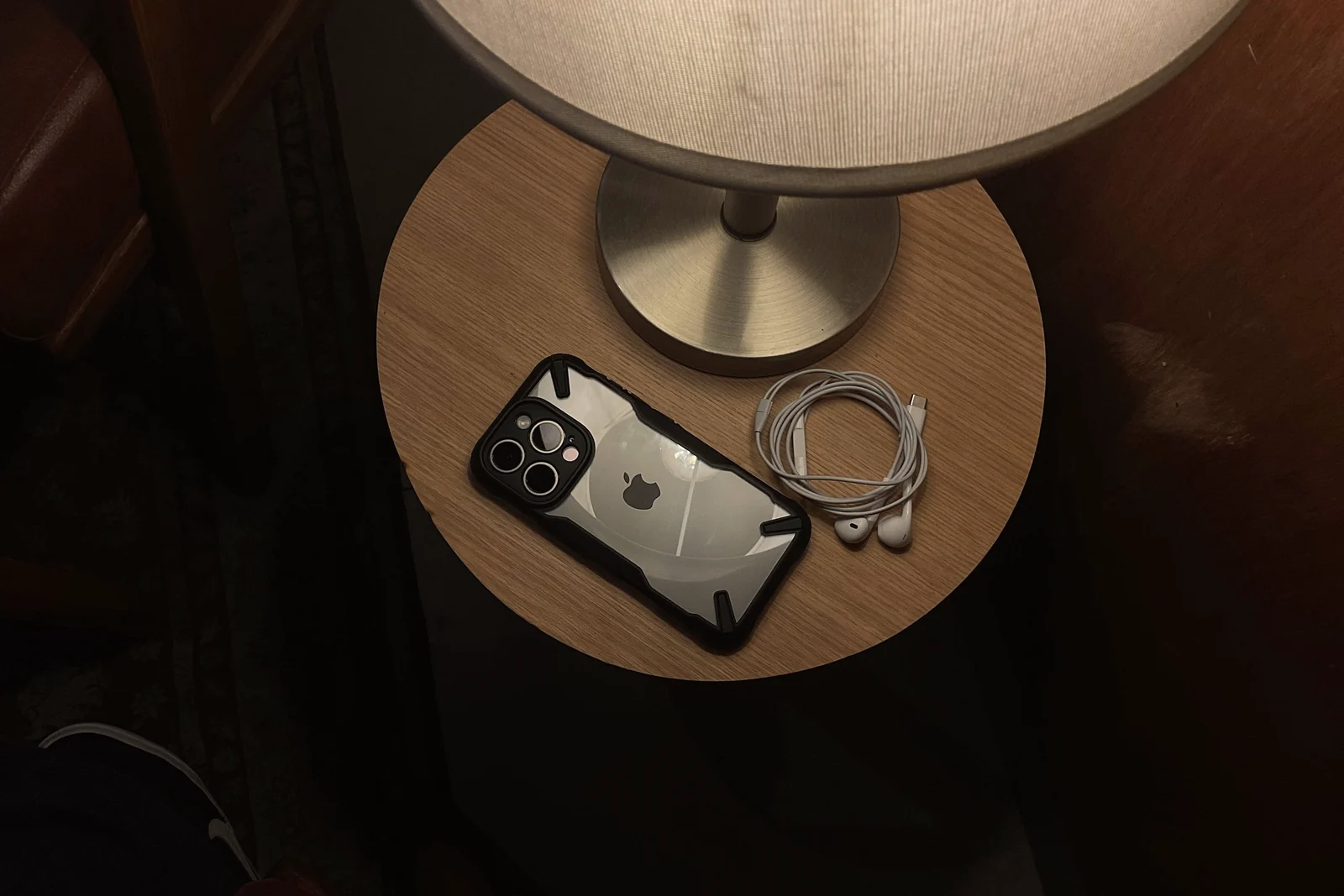
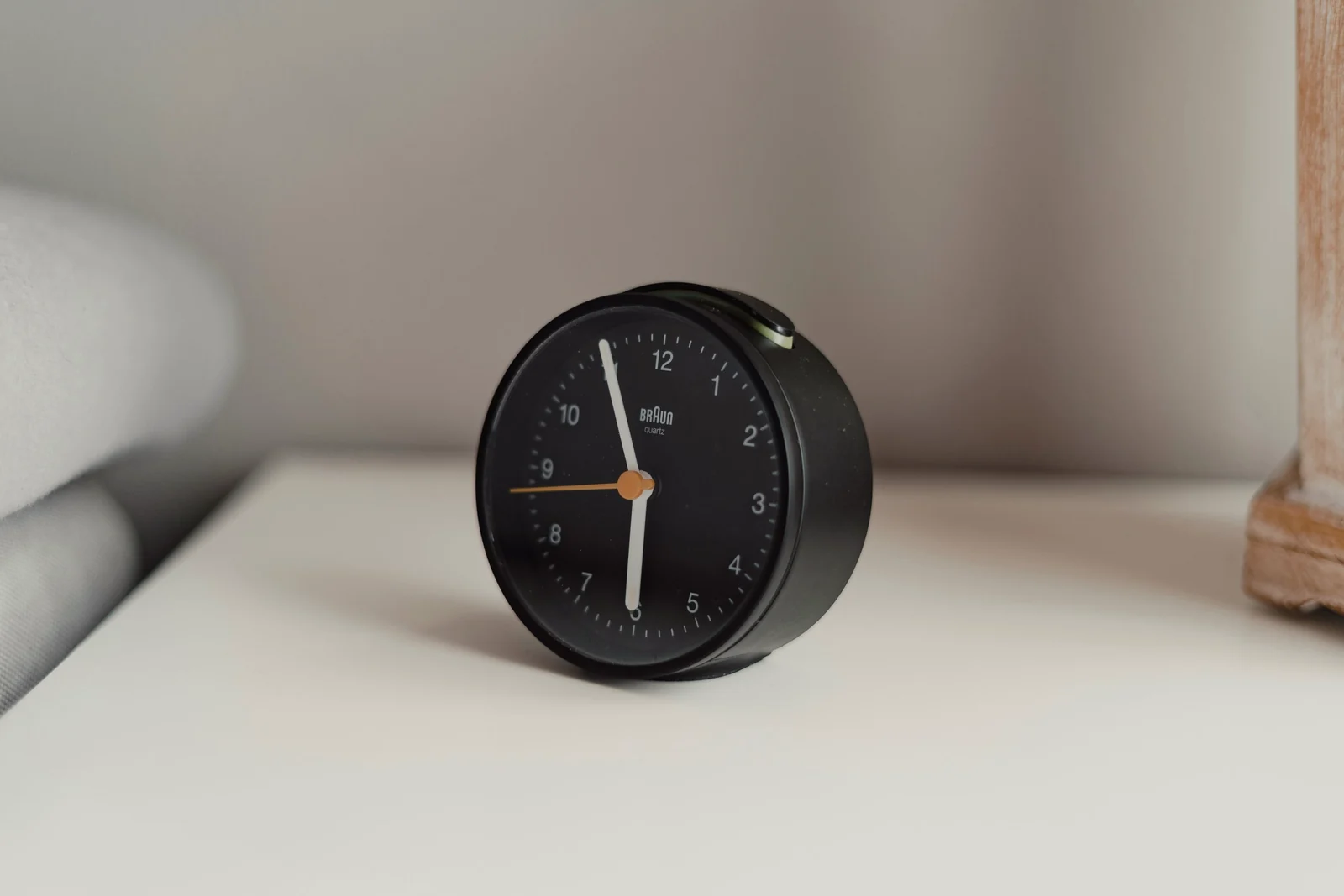
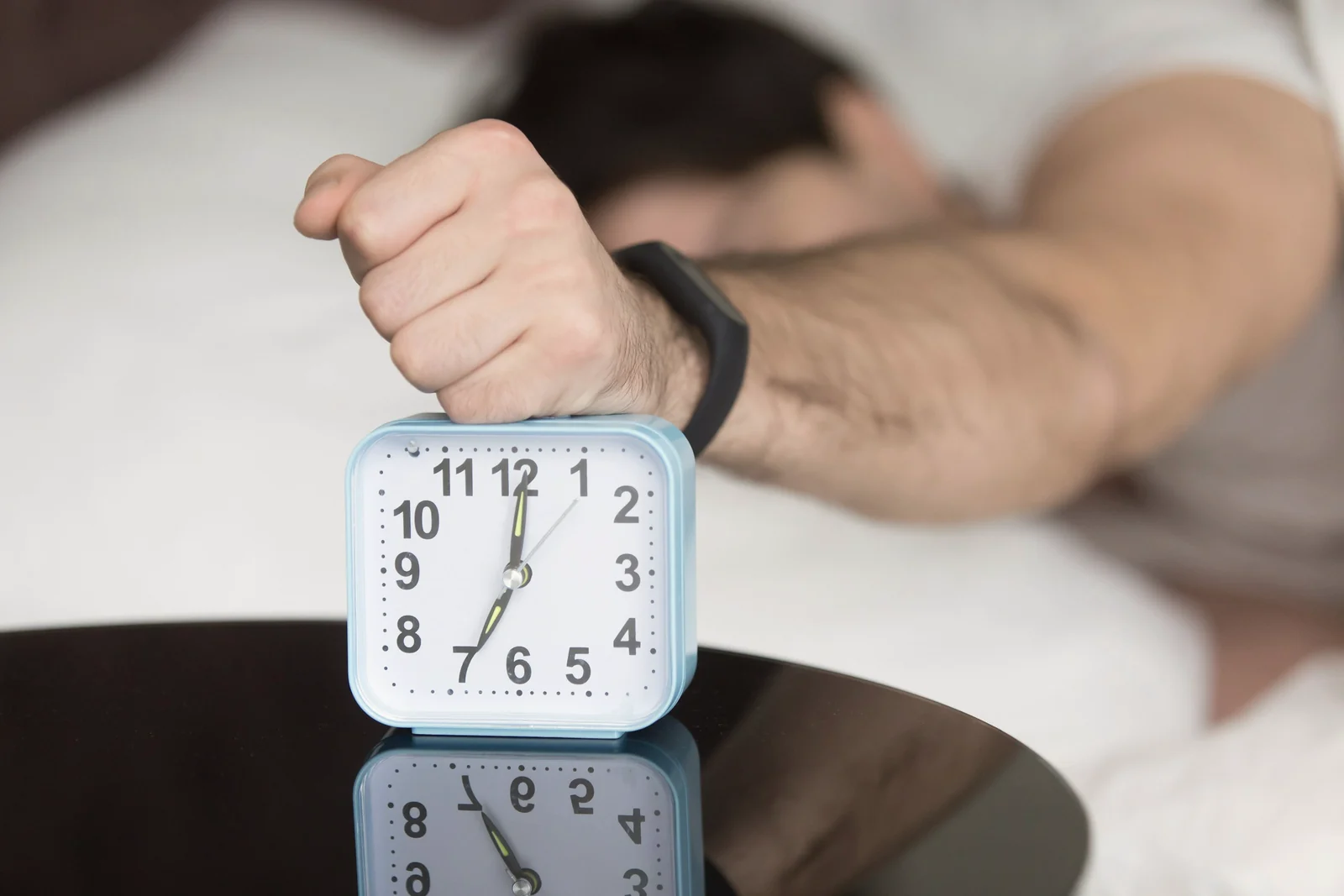
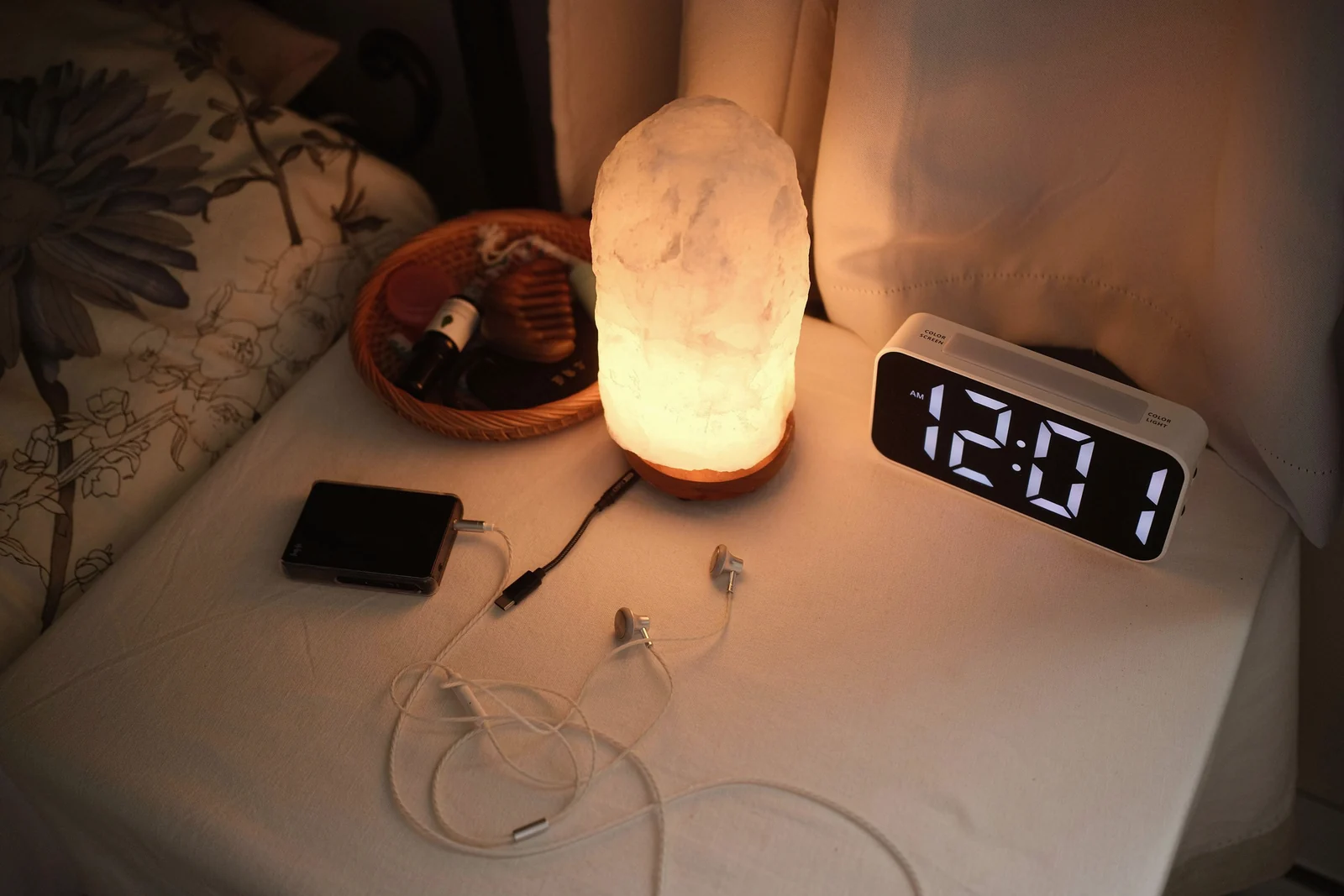
This change tends to make the biggest difference, because it removes the decision entirely. If the phone is across the room, on a shelf in the hallway, or in the kitchen, checking it means getting up, and that small effort is often enough. If your phone is also your alarm, a simple standalone alarm clock costs very little, and it makes it easier to stop checking your phone first thing in the morning too. If you need to stay reachable, keep the ringer on for calls and leave the phone within earshot, just not within reach.
Turn off what pulls you back
Spend five minutes during the day going through your notifications. Most apps don't need to reach you at night, and plenty don't need to reach you at all. Keep the people you'd want to hear from in an emergency and silence the rest. While you're there, look for the autoplay setting in the video and social apps you use most. Making the next video wait for you to choose it puts a natural pause back where there wasn't one. For the settings that help most at night, see our guide to Sleep Focus, Bedtime mode and grayscale.
Make the first few minutes easy
The hardest part of not using your phone is the five minutes after you put it down, when your hands and attention are looking for something to do. Have something ready: a book already on the pillow, a glass of water, the lamp on low. The easier the alternative is to start, the less likely you are to drift back.
How to stop doomscrolling at night
If it's the news that keeps you up, give it a time and a place. Check it once in the early evening, mute the accounts that reliably leave you anxious, and keep the phone out of reach so bad news can't find you in bed. If you're weighing up an app blocker, see when app blockers help, and when they don't.
Replace the scroll with something you enjoy
Taking something away leaves a gap, and gaps get filled. If the only plan is "don't use my phone," the evening can feel empty, and the phone is very good at filling empty space. It works much better to have something specific to move toward.
The best replacement is something you genuinely like, that takes almost no effort to start, and that has a natural ending. It doesn't need to be improving. It only has to be calmer than a feed.
- A paper book, or an e-reader without notifications. Absorbing is good; impossible to put down is not.
- A podcast or audiobook on a sleep timer, with the phone face down and out of reach once it's playing.
- A few minutes of slow stretching on the floor beside the bed.
- A conversation with whoever you live with, without a screen in between.
- Writing down tomorrow's first task so it stops circling in your head.
- Tidying one small thing, like the surface by your bed, so the room feels calmer.
Pick one and keep it simple. Trying to build a perfect evening ritual all at once is just another way of making the change harder than it needs to be. If you'd like a fuller shape for the evening, our guide to building a night routine that actually sticks walks through a realistic 25-minute version.
What to do when you break your own rule
You will, at some point. A friend messages late. You can't sleep and reach for the phone before you've thought about it. A rough day makes the feed feel like comfort. None of that means the effort has failed.
Treat a slip as information rather than a verdict. Notice what pulled you in, adjust the setup, and start again the next night. One late night doesn't undo a week of earlier ones. What does undo progress is deciding that a single slip proves the whole effort was pointless.
If you can't sleep, it's also fine to get up. Lying in bed scrolling because you're awake can teach the bed to feel like a place for being awake. Going to another room, keeping the lights low, and doing something quiet until you feel sleepy is often kinder than fighting it under the covers. Sleep specialists call this stimulus control, and it's a core part of cognitive behavioral therapy for insomnia.
A realistic seven-evening experiment
Instead of committing to a permanent change, try a one-week experiment. You're not trying to be perfect, just to find out what actually helps you.
- Evening 1Just notice.
Use your phone as you normally would, but pay attention. When do you pick it up? What do you open first? When do you finally put it down?
- Evening 2Choose your cutoff.
Pick a realistic time, twenty or thirty minutes before you want to sleep, and link it to something you already do each night.
- Evening 3Move the charger.
Find a charging spot you can't reach from bed. If you need an alarm, set up a separate one.
- Evening 4Quiet the pull.
Turn off the notifications you don't need at night and switch off autoplay in the app you use most.
- Evening 5Add your replacement.
Have your book, podcast or other calm activity ready before your cutoff arrives.
- Evening 6Expect a harder night.
Weekends and stressful days are when old habits come back. Decide in advance what you'll do if you're tempted.
- Evening 7Look back.
Which change made the biggest difference? Which felt like too much? Keep what helped and let the rest go.
By the end of the week, you'll know much more about where your evenings were going and which small changes are worth keeping. That's more useful than any rule someone else can hand you. If you want to dig into the numbers too, here's how to read your screen time reports and cut nighttime screen time without going to extremes.
Try this tonight
If you only do one thing, make it this: before you get into bed tonight, put your phone on charge somewhere you can't reach from your pillow. Don't worry about a cutoff, an app, or a routine yet. Just add a few steps between you and the scroll, and see how the evening feels with a little more room in it.
You may still pick it up. That's fine. By tomorrow you'll know a little more about why, and that's a better place to start than a promise to be stronger.